1. Standard Tamil Keyboard Layout
High resolution image suitable for printing.
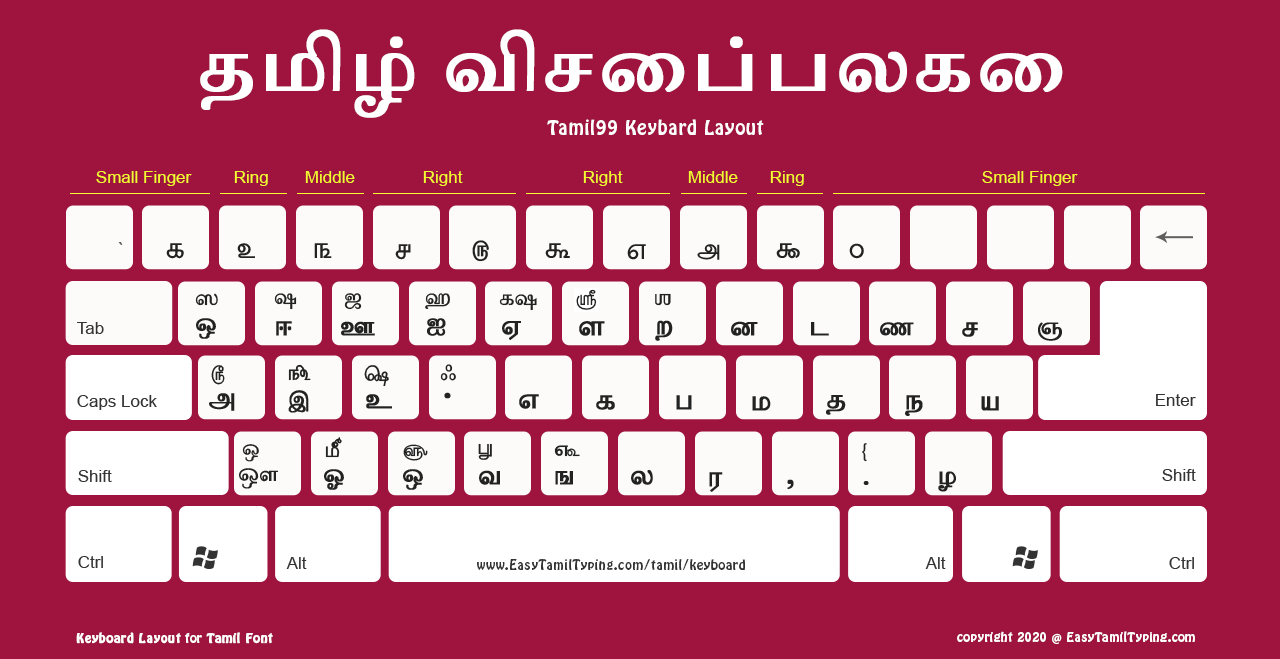
We have five different Tamil keyboard layouts for you to download on your computer. Once downloaded — you can use it as a reference to type in Tamil either on Word document or any other text editor. You also need to download the matching Tamil fonts.
High resolution image suitable for printing.
High resolution image suitable for printing.
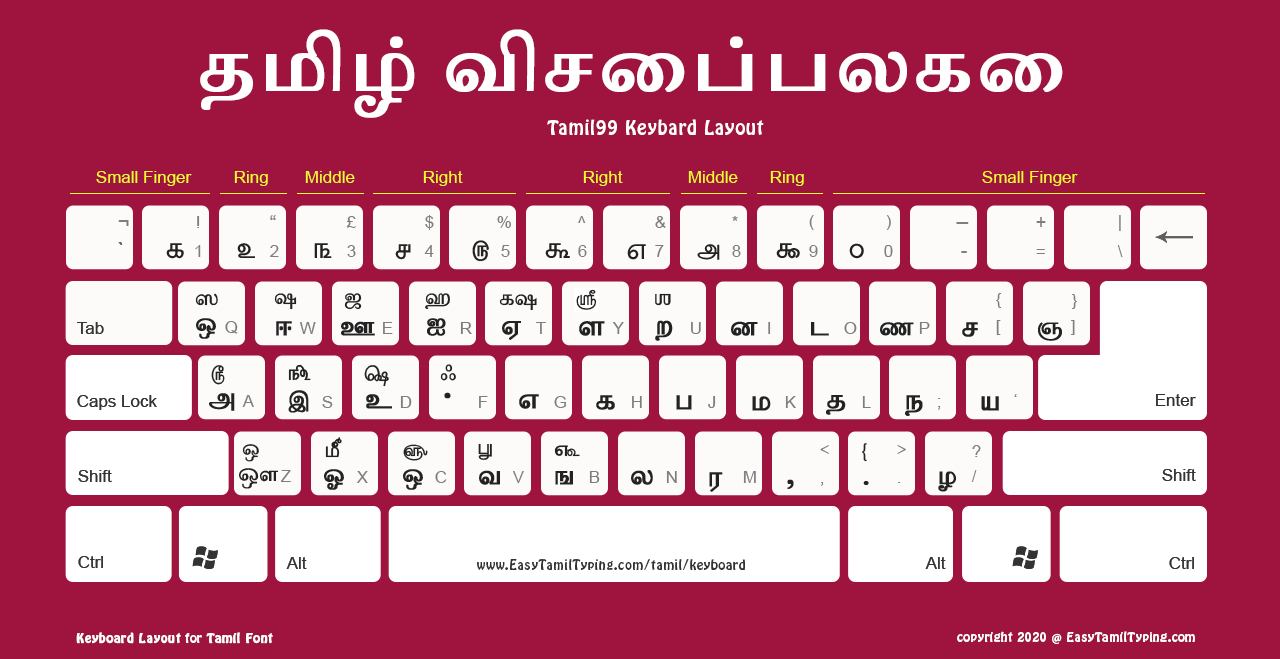
High resolution image suitable for printing.
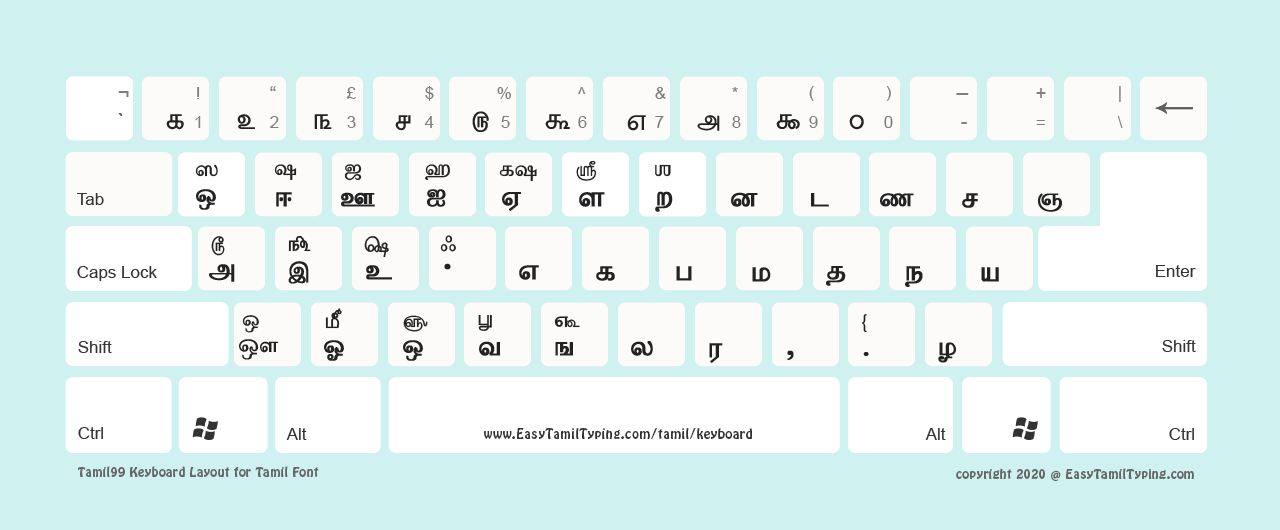
High resolution image suitable for printing.
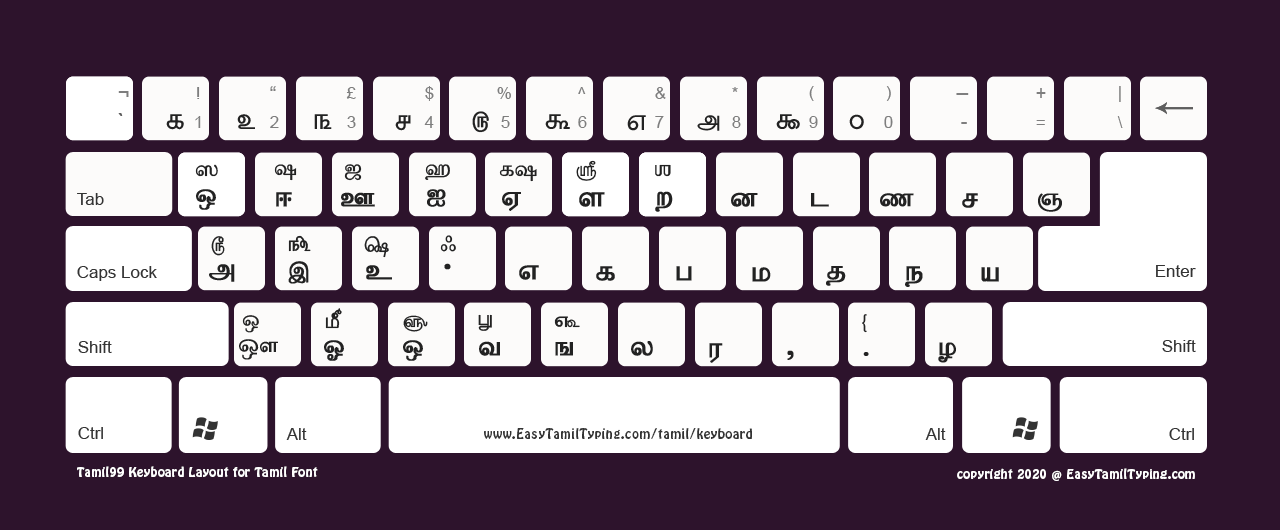
High resolution image suitable for printing.
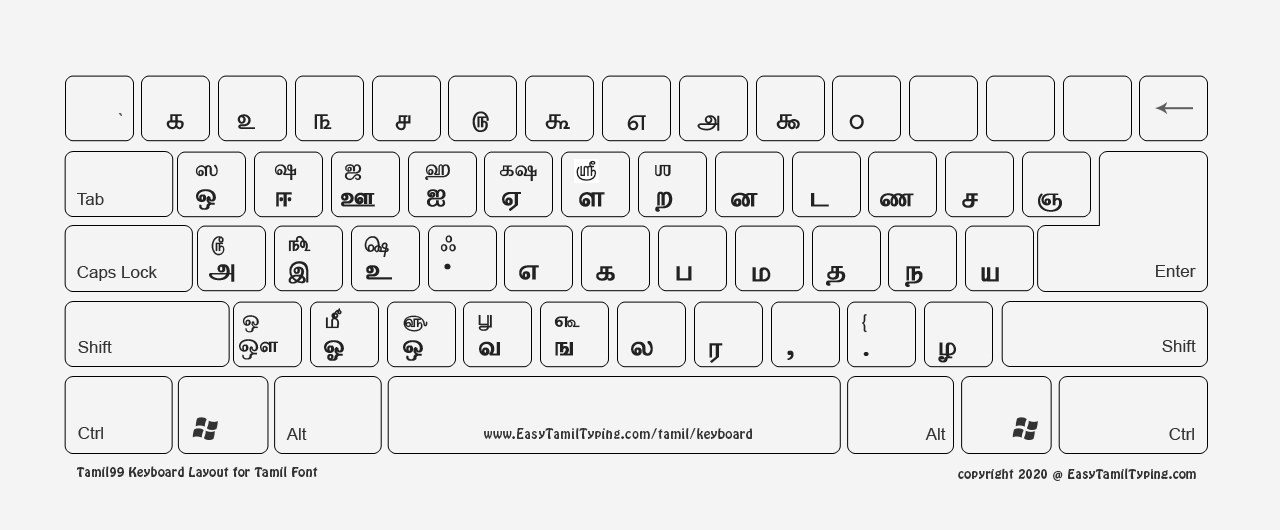
Here's our systematic approach to setting up Tamil typing.
Acquire your Tamil font — browse our curated fonts library and install the ideal typeface for your Tamil writing needs.
Obtain your keyboard reference using this reliable download process:
Click on your preferred keyboard layout from our collection
Right-click when the high-resolution image appears
Choose "Save image as..." and save to your preferred location
Establish your typing environment by opening any word processor and selecting the Tamil font you installed earlier.
Launch your Tamil writing session! Position your keyboard image for easy viewing while you compose beautiful Tamil text.
Expert recommendation: Limited screen space? Our keyboards deliver outstanding print clarity — print one for a reliable desktop reference that's always ready when you need it!
Designed for Tamil99 keyboard layout — accurately mapped to provide an authentic Tamil typing experience with correct character placement.
Meets professional standards — designed for typists, and businesses requiring error-free Tamil documentation.
Supports various display formats — perfect for presentations, reference guides, digital displays, and high-quality printing.
Offers unrestricted licensing — use freely for academic research, commercial projects, educational materials, or personal correspondence.
I’m missing details to create the paper you want. I'll make reasonable assumptions: a 1,200–1,500 word academic-style paper in English about the fictional or unspecified subject "kamiwoakira" (interpreted as a character, concept, or work). If you meant something else (a real person, different length, another language, or a specific paper type), tell me and I’ll revise.
Abstract This paper examines "Kamiwoakira" as a cultural-artistic construct, tracing its mythic roots, formal characteristics, and interpretive significance. Drawing on comparative mythology, narrative theory, and visual culture studies, the analysis situates Kamiwoakira within traditions of hybrid deity-artist figures and argues that the work embodies tensions between creation and erasure, agency and anonymity. The paper concludes by proposing avenues for future research, including archival retrieval and multimedia practice.
Implications for Contemporary Art Theory Kamiwoakira challenges conventional categories in art theory: authorship, originality, and medium specificity. It foregrounds process over product, community over individual genius, and enacted ritual over static display. The figure thus aligns with broader shifts toward networked, participatory, and post-anthropocentric aesthetics. kamiwoakira work
Here’s a 1,300-word academic-style paper titled "Kamiwoakira: Myth, Medium, and Meaning." Kamiwoakira: Myth, Medium, and Meaning
Methodological Notes Studying a protean figure like Kamiwoakira requires interdisciplinary methods: close formal analysis, ethnographic fieldwork with participant-observers, digital archival recovery, and interviews with collaborators. Archival methods should attend to ephemeral traces—videos, social media, oral histories—while remaining attentive to consent and cultural sensitivity. I’m missing details to create the paper you want
Reception and Cultural Politics Reception of Kamiwoakira-style works varies across contexts. In global art circuits, such practices may be valorized for their conceptual rigor and hybridity. In local or traditional settings, they can be controversial—perceived as appropriative or as subverting sacred practices. Ethical considerations arise when contemporary artists engage with indigenous or religious forms; respectful collaboration and attribution become crucial.
Mythic Frameworks and Comparative Parallels Positioning Kamiwoakira within mythic typologies illuminates its narrative functions. Like divine trickster-creator archetypes (Hermes, Loki, Prometheus), Kamiwoakira can be read as a mediator of knowledge and boundary-crossing. Alternatively, parallels with patron-deity artists (e.g., Athena/Minerva as craftsmen's patron) suggest a figure who legitimizes craft and innovation. The paper argues that Kamiwoakira synthesizes these roles: a liminal force that both engenders art and destabilizes authorship. parallels with patron-deity artists (e.g.
Themes: Creation, Erasure, and Anonymity A persistent theme is the dialectic between creation and erasure. Kamiwoakira’s works often incorporate processes of fading, overwriting, or deliberate destruction—echoing practices such as palimpsest and rites of mourning. Anonymity operates as both protection and provocation: by obscuring authorship, the work redirects attention to communal or spiritual dimensions of meaning-making.
 Sambhu Raj Singh ·